
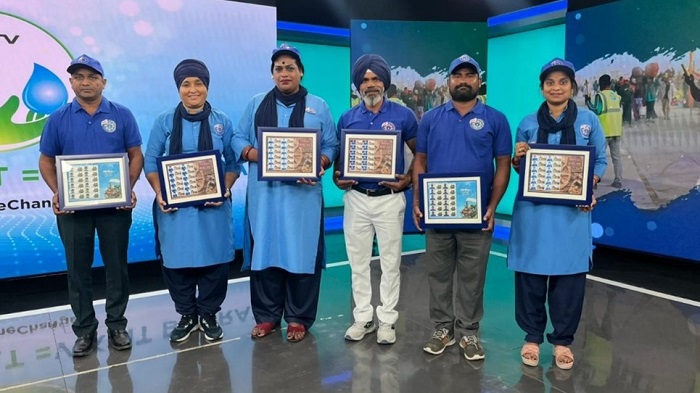
Reckitt unveiled a historic tribute to India’s sanitation workforce, the backbone of India’s cleanliness and health, on World Toilet Day. Reckitt has supported the Swachh Bharat Mission, focusing on infrastructure and behavioural change, operations, and maintenance, the critical investments that create lasting impact. Under its flagship initiative, Dettol Banega Swasth India, the campaign launched a special collection of six commemorative postage stamps, celebrating the dignity, resilience, and indispensable role of sanitation workers in shaping a cleaner, healthier India. This initiative is deeply aligned with the vision of Sabka Saath, Sabka Vikas, Sabka Prayas, the foundation of India’s progress. The commemorative stamps represent a national statement of pride and progress, acknowledging that true development is measured by GDP and gross domestic behaviour, the dignity, health, and well-being of every citizen.
Sanitation workers have long remained invisible, despite performing hazardous work essential to public health. Their life expectancy is just 45 years compared to 75 years for the average citizen, which reflects systemic inequities. Through the Harpic World Toilet College (HWTC)initiative, Reckitt is working to bridge this gap by empowering sanitation workers with skills, safety practices, and dignity—lifting them out of poverty and breaking the intergenerational trap. Since 2018, HWTC has trained over one lakh sanitation workers, equipping them with technical knowledge, life skills, and access to safer, more dignified livelihoods. These efforts have transformed lives, enabling workers to become agents of change in their communities.
Reckitt believes everyone has a right to good health and hygiene, says Gaurav Jain, Executive Vice President, Reckitt – South Asia. Sanitation workers are the backbone of India’s hygiene ecosystem. They protect our communities, safeguard our cities, and uphold the nation’s health every single day, Jain points out.
Six sanitation workers
- Jaswinder Kaur from Patiala: A breast cancer survivor who rebuilt her life and now ensures clean, safe government school toilets for children.
- Kuku Ram from Patiala: A sanitation worker and international bodybuilding champion, supported by WTC to pursue his dreams and represent India globally, overcoming overwhelming challenges.
- Sunil Kapursing Siraswal from Sambhajinagar: Once a daily-wage manhole cleaner, he formed the Swachhta Ratna Purush Bachat Gat self-help group and is now a community leader advocating mechanised sanitation and safe practices.
- Arati Naik from Bhubaneswar: From years of unstable work to a secure sanitation role, she regained her confidence and built a stable future for her children.
- Shushil Kumar from Varanasi: Coming from a family where no one had attended school for seven generations, he is now a community role model advocating education and hygiene.
- Sital Bastia from Cuttack: Someone who once had to fight for her identity, she found dignity and purpose through WTC training and now manages a Septage Treatment Plant.
